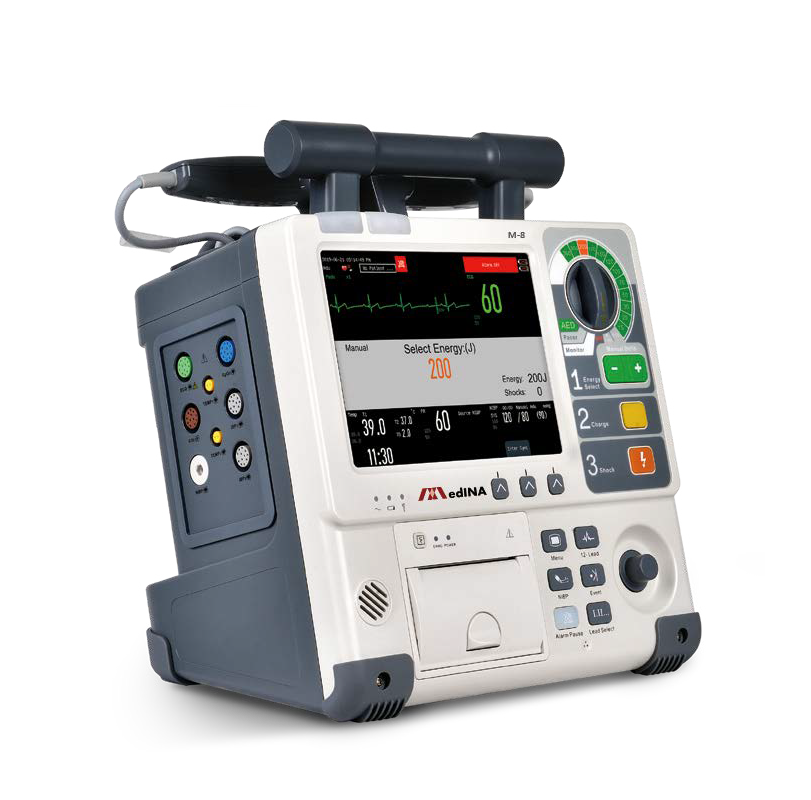
Sudden cardiac arrest is a life threatening condition where the heart unexpectedly stops beating effectively, leading to loss of circulation and collapse. Immediate action through cardiopulmonary resuscitation (CPR) combined with defibrillation is the most effective way to restore normal heart rhythm and improve survival chances.
Defibrillator is essential tools in modern resuscitation practices, both in hospitals and public settings. A defibrillator is a medical device that delivers a controlled electric shock to the heart. The purpose of this shock is to depolarize the heart muscles simultaneously, allowing the natural pacemaker (the sinoatrial node) to regain control and restore a normal rhythm.
Some types of Defibrillators, such:
- Automated External Defibrillator (AED):
- Portable, easy to use device.
- Provides voice and visual prompts for rescuers.
- Commonly found in airports, schools, offices, and public spaces.
- Manual Defibrillator:
- Used mainly by trained healthcare providers.
- Requires interpretation of cardiac rhythm before shock delivery.
- Implantable Cardioverter Defibrillator (ICD):
- Surgically implanted in patients at risk of recurrent arrhythmias.
- Automatically detects and corrects abnormal rhythms.
Defibrillators are critical when cardiac arrest is caused by shockable rhythms such as:
- Ventricular fibrillation (VF)
- Pulseless ventricular tachycardia (VT)
During Cardiopulmonary Resuscitation:
- Assessment: The patient is unresponsive, not breathing normally, and has no pulse.
- CPR Initiation: Chest compressions and rescue breaths are started immediately to maintain blood flow.
- Defibrillator Use:
- Attach defibrillator pads to the patient’s chest.
- The device analyzes the heart rhythm.
- If a shockable rhythm is detected, the rescuer delivers a shock (AED will prompt automatically).
- CPR is resumed immediately after the shock.
This cycle of CPR and defibrillation continues until spontaneous circulation returns or advanced medical help takes over.
Importance of Early Defibrillation:
- Every minute without defibrillation reduces survival by 7–10%.
- Early use of an AED by bystanders can double or triple survival rates.
- Widespread availability of AEDs in public areas significantly improves community response to cardiac arrest.
Safety Considerations
- Ensure no one is touching the patient during shock delivery.
- Follow the AED’s step-by-step instructions carefully.
- Maintain proper pad placement (right upper chest and left lower side).
In conclusion, Defibrillators are life saving devices that may play a central role in cardiopulmonary resuscitation. When used quickly and correctly, especially in combination with effective CPR, they greatly improve the chances of survival from sudden cardiac arrest. Increasing public awareness, training, and accessibility of AEDs are vital steps toward saving more lives. (IW 1509)