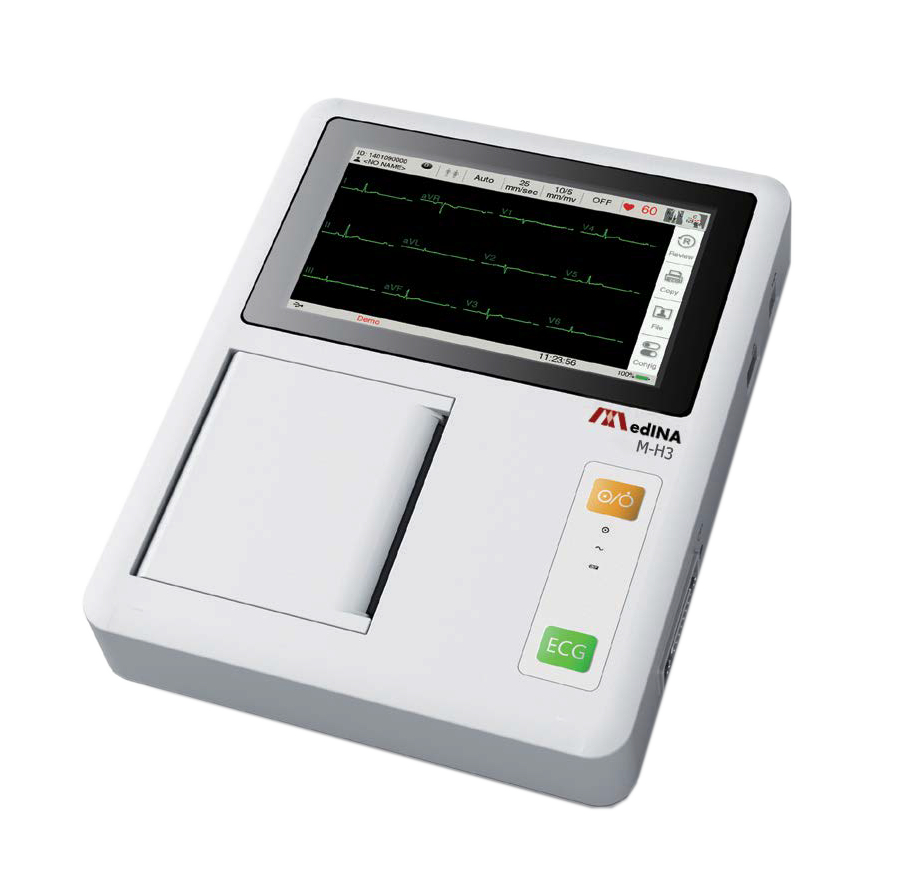
Acute myocardial infarction (AMI), commonly known as a Heart attack, is a life threatening condition that requires rapid diagnosis and management. Among the available diagnostic and monitoring tools, the electrocardiogram (ECG) may plays a central role.
Continuous ECG monitoring provides not only immediate diagnostic information but also ongoing assessment of a patient’s cardiac status.
1. Early Diagnosis of Infarction
Rapid detection of ischemic changes such as ST segment elevation or depression, T wave inversion, and pathological Q waves. It may helps differentiate between ST elevation myocardial infarction (STEMI) and non-ST elevation myocardial infarction (NSTEMI), guiding urgent treatment decisions. Early identification allows for timely reperfusion therapy (e.g., PCI or thrombolysis), which improves survival.
2. Guidance for Treatment
ECG monitoring provides feedback on the effectiveness of reperfusion therapy, showing resolution of ST elevation or improvement in rhythm. Assists clinicians in adjusting antiarrhythmic therapy, beta-blockers, or electrolyte correction based on rhythm trends. It provides crucial information for deciding the need for urgent interventions like temporary pacing or advanced cardiac life support.
3. Continuous Monitoring for complications
AMI patients are at high risk of life-threatening arrhythmias such as Ventricular Tachycardia, Ventricular Fibrillation, and Complete heart block. Continuous ECG monitoring enables immediate detection of rhythm disturbances, ensuring rapid intervention with defibrillation, pacing, or medication. It helps track dynamic ST segment changes, which may signal recurrent ischemia or infarct extension.
4. Cost effective and widely available
ECG monitoring is non-invasive, low-cost, and easily performed in virtually all healthcare settings. It is a bedside tool, requiring minimal patient movement, making it ideal for critically ill patients. Continuous monitoring systems can be integrated with telemetry, allowing real-time observation even in resource limited settings.
5. Risk Stratification and prognosis
Persistent ST changes, arrhythmias, or conduction abnormalities seen on monitoring are associated with higher mortality and complication risks. It can helps identify patients who require intensive care unit (ICU) monitoring versus those stable enough for step down care. ECG trends, when combined with biomarkers and imaging, improve overall prognostic accuracy.
In conclusion, ECG monitoring is an essential component in the management of acute myocardial infarction. It enables early diagnosis, continuous surveillance for complications, guidance of therapy, risk stratification, and cost-effective care delivery. For these reasons, continuous ECG monitoring remains a cornerstone of modern cardiology practice and a lifesaving tool in patients experiencing AMI. (IW 0109)