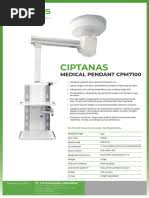
A medical pendant is a movable ceiling-mounted unit installed in operating theaters, intensive care units (ICUs), and emergency rooms.
Pendants can be single-arm or double-arm systems and are designed to rotate and adjust to meet surgical needs.
It is an essential piece of equipment in modern hospital operating rooms. It is a ceiling-mounted system designed to support medical devices, gas outlets, electrical connections, and monitors while improving workflow efficiency and patient safety.
Medical pendants may play a vital role in creating a well-organized, sterile, and ergonomic operating environment.
There are some benefits of Medical Pendants in Operating Rooms, include:
Enhanced Workflow Efficiency
With gases, power outlets, and medical equipment positioned close to the surgical field, healthcare professionals can access everything they need quickly. This improves response time and overall surgical efficiency.
Improved Patient Safety
Medical pendants reduce floor clutter by eliminating cables, hoses, and equipment stands. This minimizes tripping hazards and allows medical staff to move freely around the patient, especially during critical surgical procedures.
Optimized Use of Space
Ceiling-mounted pendants free up valuable floor space, making operating rooms more spacious and easier to clean. This is particularly beneficial in high-traffic surgical environments.
Ergonomic Advantages
Adjustable arms and shelves allow equipment to be positioned at optimal heights and angles. This reduces physical strain on surgeons, anesthesiologists, and nurses during long surgical procedures.
Flexible Equipment Management
Medical pendants can support monitors, infusion pumps, anesthesia machines, and other devices. Their modular design allows hospitals to customize configurations based on specific surgical requirements.
Better Infection Control
By keeping equipment off the floor, medical pendants help maintain a cleaner and more sterile environment. This supports hospital infection control protocols and reduces the risk of contamination in operating rooms.
Some uses of Medical Pendants in Operating Hospitals, such as:
- Operating Theaters: Support anesthesia equipment, surgical monitors, medical gases, and power supply.
- Recovery Rooms: Assist in patient monitoring and post-operative care.
- Intensive Care Units (ICUs): Provide organized access to life-support systems and monitoring devices.
- Emergency Rooms: Enable rapid access to essential equipment during critical care situations.
In conclusion, Medical pendants are a crucial component of modern operating hospitals. Their ability to improve safety, efficiency, ergonomics and infection control makes them indispensable in surgical environments. As hospitals continue to advance technologically, medical pendants will remain a key element in delivering high-quality and safe patient care. (IW 1201)