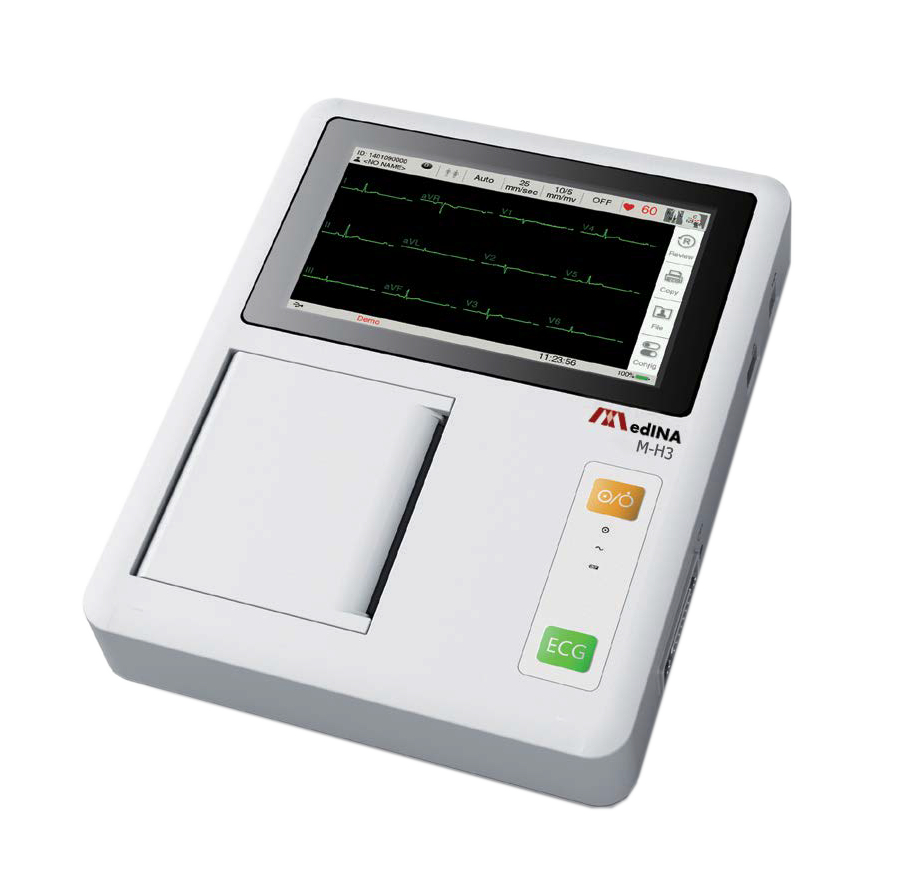
ECG monitoring provides real-time information about the electrical activity of the heart, allowing healthcare professionals to rapidly detect, diagnose, and manage life-threatening cardiac conditions.
The Intensive Care Unit (ICU) is a high-acuity clinical environment where patients are critically ill and require continuous, advanced monitoring.
As known, one of the most essential tools in the ICU is Electrocardiography (ECG).
There are some benefits of ECG monitoring in the ICU and its role in improving patient outcomes, include:
Early detection of Life-threatening Arrhythmias
ECG monitoring allows early identification of dangerous arrhythmias such as ventricular tachycardia, ventricular fibrillation, atrial fibrillation with rapid ventricular response, and severe bradycardia. Immediate recognition of these rhythms is crucial, as they may lead to hemodynamic instability or cardiac arrest. Early detection facilitates rapid intervention, including defibrillation, cardioversion, pacing, or pharmacological therapy.
Assessment of Myocardial Ischemia and Infarction
In ICU patients, especially those with cardiovascular disease or hemodynamic instability, Use ECG may plays a vital role in identifying myocardial ischemia or acute myocardial infarction. ST-segment changes, T-wave abnormalities, and new conduction defects can signal inadequate coronary perfusion. Prompt recognition allows early initiation of reperfusion strategies and supportive therapies, reducing myocardial damage and mortality.
Continuous Cardiac monitoring
A primary benefit of ECG in the ICU is continuous cardiac surveillance. Critically ill patients are at high risk for sudden cardiac deterioration due to sepsis, electrolyte imbalance, hypoxia, drug effects, or underlying heart disease. Continuous ECG monitoring enables clinicians to observe heart rate, rhythm, and conduction patterns at all times, ensuring that even transient or asymptomatic abnormalities are detected promptly.
Monitoring effects of Medications & Electrolytes
Many medications used in the ICU such as antiarrhythmics, sedatives, and inotropes can affect cardiac conduction and rhythm. ECG monitoring helps detect adverse drug effects, including QT interval prolongation and conduction block. Similarly, electrolyte imbalances (e.g., potassium, calcium, and magnesium abnormalities) produce characteristic ECG changes, enabling early diagnosis and correction before severe complications occur.
Guidance for Clinical Decision making
ECG findings may help guide treatment decisions in critically ill patients. Adjustments to antiarrhythmic drugs, vasoactive medications, fluid management, and electrolyte correction are often based on ECG changes. Additionally, ECG monitoring supports the evaluation of treatment effectiveness, allowing clinicians to assess whether interventions are stabilizing or worsening cardiac function.
Enhanced Patient Safety
Continuous ECG monitoring enhances overall patient safety by providing early warning signs of clinical deterioration. Alarm systems notify healthcare staff of critical changes, allowing timely intervention even when direct patient observation is limited. This is especially important in mechanically ventilated or sedated patients who cannot report symptoms.
Support for Multidisciplinary Care
ECG data in the ICU supports collaboration among Cardiologists, Intensivists, Nurses, and other healthcare professionals. Standardized ECG interpretation and continuous data recording improve communication, documentation, and continuity of care, contributing to better clinical coordination and outcomes.
In conclusion, ECG monitoring is a cornerstone of patient management in the Intensive Care Unit. Its benefits include early detection of life threatening arrhythmias, assessment of myocardial ischemia, continuous cardiac surveillance guidance for clinical decision making, and enhanced patient safety. By enabling rapid diagnosis and timely intervention, ECG monitoring plays a critical role in reducing morbidity and mortality among critically ill patients. (IW 1512)