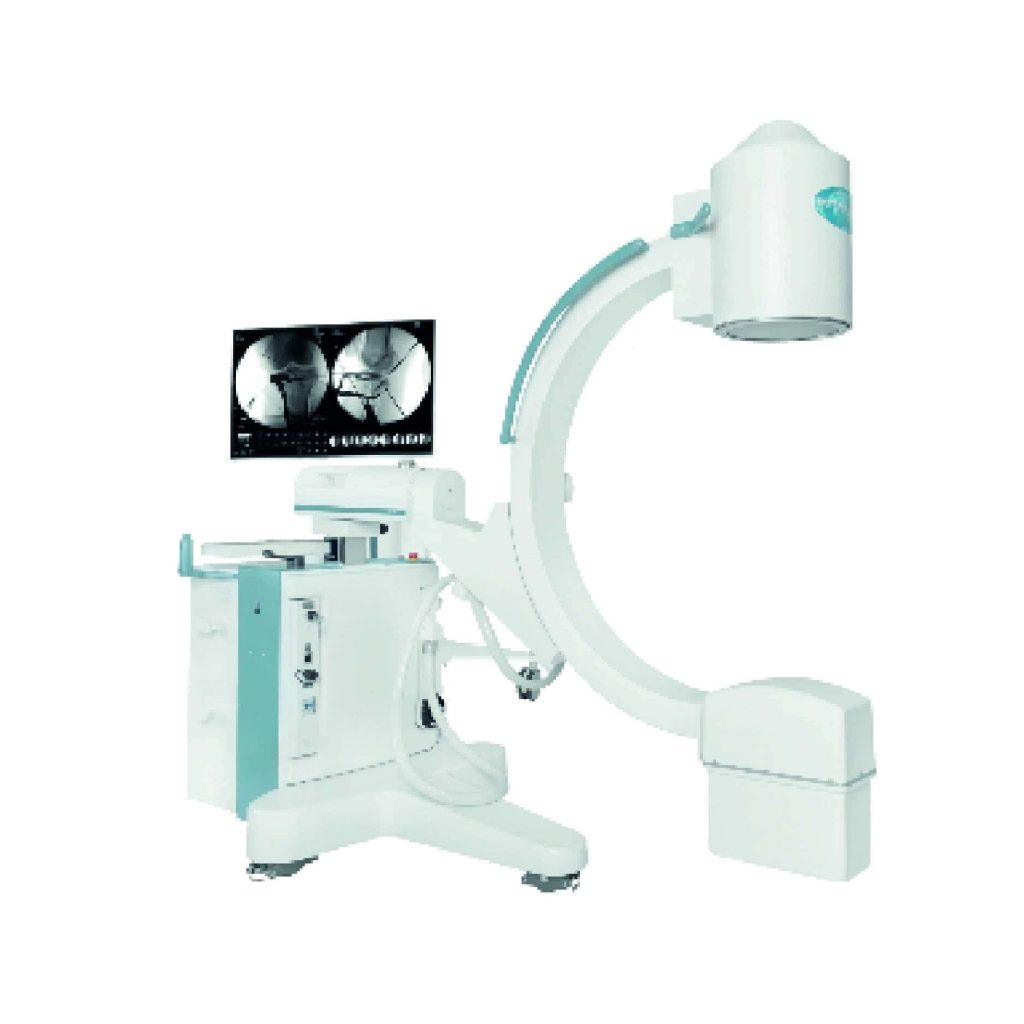
In modern medical imaging, the C-arm has become an essential tool in radiology and interventional procedures. Named for its distinctive C-shaped arm that connects the X-ray source and detector, this device enables real time fluoroscopic imaging during surgical, orthopedic, and diagnostic interventions.
Its precision, mobility and ability to deliver immediate visualization make it indispensable in today’s medical environments.
There are some benefits use C arm in modern healthcare, include:
Real time Imaging
One of the most significant advantages of the C-arm is its ability to provide real-time, high-resolution X-ray images. This live imaging capability allows clinicians to monitor procedures as they happen, adjust techniques instantly, and confirm accurate device placement particularly important in vascular interventions, orthopedic surgeries, catheter placements and other interventions.
Versatility across Specialties
C-arms are widely used across multiple medical specialties, including:
- Cardiology
Angiography, pacemaker implantation
- Orthopedics
Fracture fixation, joint replacement, and spinal surgery
- Urology
stent placement and stone removal
- Pain management
Epidural injections and nerve blocks
This versatility makes the C-arm a cost effective and multifunctional investment for hospitals and clinics.
Mobility and Flexibility
Modern mobile C-arm systems are compact and easy to maneuver, allowing use in various settings such as operating rooms, emergency departments, and outpatient clinics. Their rotational and angulation capabilities provide multiple viewing angles without repositioning the patient, enhancing both workflow and comfort.
Enhanced Precision and Safety
C-arms enable precise localization of anatomical structures, minimizing the risk of error during complex procedures. Surgeons can view detailed anatomical guidance on-screen, reducing the likelihood of damaging surrounding tissues. This improved accuracy translates into shorter procedure times, reduced radiation exposure, and better patient outcomes.
Digital Integration and Data Management
Contemporary C-arms often feature digital storage and connectivity options, allowing seamless integration with Hospital Information Systems (HIS) and Picture Archiving and Communication Systems (PACS). This facilitates efficient image sharing, remote consultations, and long-term patient record management.
Reduced Radiation exposure
Compared to traditional fluoroscopy systems, many modern C-arms are equipped with advanced dose reduction technologies such as pulsed fluoroscopy, collimation, and digital image processing. These features help maintain image quality while minimizing radiation exposure to both patients and healthcare staff.
In conclusion, the C-arm has revolutionized radiological imaging and intraoperative visualization. Its combination of real-time imaging, precision, versatility, and safety makes it a cornerstone of modern interventional medicine. As technology continues to advance, C-arm systems are expected to become even more efficient, providing clearer images with lower doses and expanding the boundaries of minimally invasive care. (IW 1011)