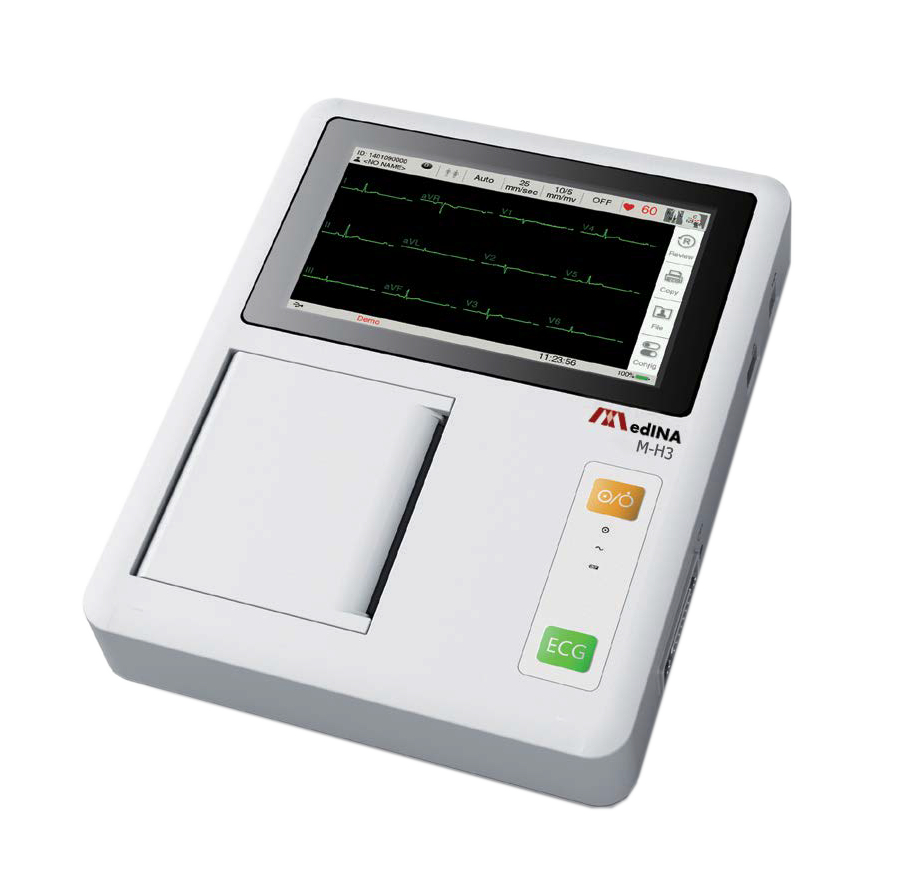
An electrocardiogram (ECG) is a non-invasive, painless test that records the electrical activity of the heart over a period of time using electrodes placed on the skin. It is one of the most widely used tools in cardiology for evaluating heart function and detecting various heart disorders, particularly cardiac arrhythmias. The heart generates tiny electrical impulses that coordinate the contraction of the heart muscles. An ECG records these impulses to produce a graphical representation (waveform) that reflects the rhythm, rate, and electrical conduction patterns of the heart.
A typical ECG tracing includes:
P wave – representing atrial depolarization
QRS complex – representing ventricular depolarization
T wave – representing ventricular repolarization
Cardiac arrhythmia is a condition in which the heart beats irregularly—either too fast, too slow, or erratically. Common types of arrhythmias include:
Atrial fibrillation (AFib) – rapid, irregular atrial beats
Bradycardia – abnormally slow heart rate
Tachycardia – abnormally fast heart rate
Ventricular fibrillation – chaotic electrical activity in the ventricles
Premature contractions – extra or early heartbeats
Some arrhythmias are harmless, while others may be life-threatening, requiring immediate medical intervention.
The ECG is crucial for the detection and classification of arrhythmias, such:
Rhythm Analysis:
ECG shows whether the heart rhythm is regular or irregular. For example, an irregularly irregular rhythm suggests atrial fibrillation.
Conduction Abnormalities:
The intervals and segments (like PR, QRS, QT) help determine if the electrical signal is traveling properly through the heart.
Rate Detection:
It accurately measures heart rate. Bradycardia (<60 bpm) or tachycardia (>100 bpm) can be easily identified.
Identification of Ectopic Beats:
Premature atrial or ventricular contractions can be observed directly on the waveform.
Monitoring Effects of Medication:
Some antiarrhythmic drugs can prolong the QT interval, increasing the risk of torsades de pointes—a potentially dangerous ventricular arrhythmia. Immediate Diagnosis in Emergencies: In cases of syncope or cardiac arrest, ECG is vital for rapid diagnosis and treatment initiation.
There are some benefits of ECG in Arrhythmia Diagnosis
Non-Invasive and Safe: No needles, radiation, or special preparation required.
Quick and Accessible: ECGs are widely available, even in emergency settings.
Real-Time Information: Provides immediate insights into the electrical function of the heart.
Cost-Effective: Compared to other diagnostic tools, ECGs are relatively inexpensive.
Useful in Continuous Monitoring: Through Holter monitors or event recorders, ECG technology can capture transient arrhythmias not seen in a single reading.
As conclusion, an electrocardiogram is a fundamental tool in modern medicine, especially in the diagnosis and management of cardiac arrhythmias. Its ability to provide a real-time, non-invasive view into the heart’s electrical activity makes it invaluable for clinicians. Timely detection of arrhythmias using ECG can lead to early intervention and significantly improve patient outcomes. (IW 0707)