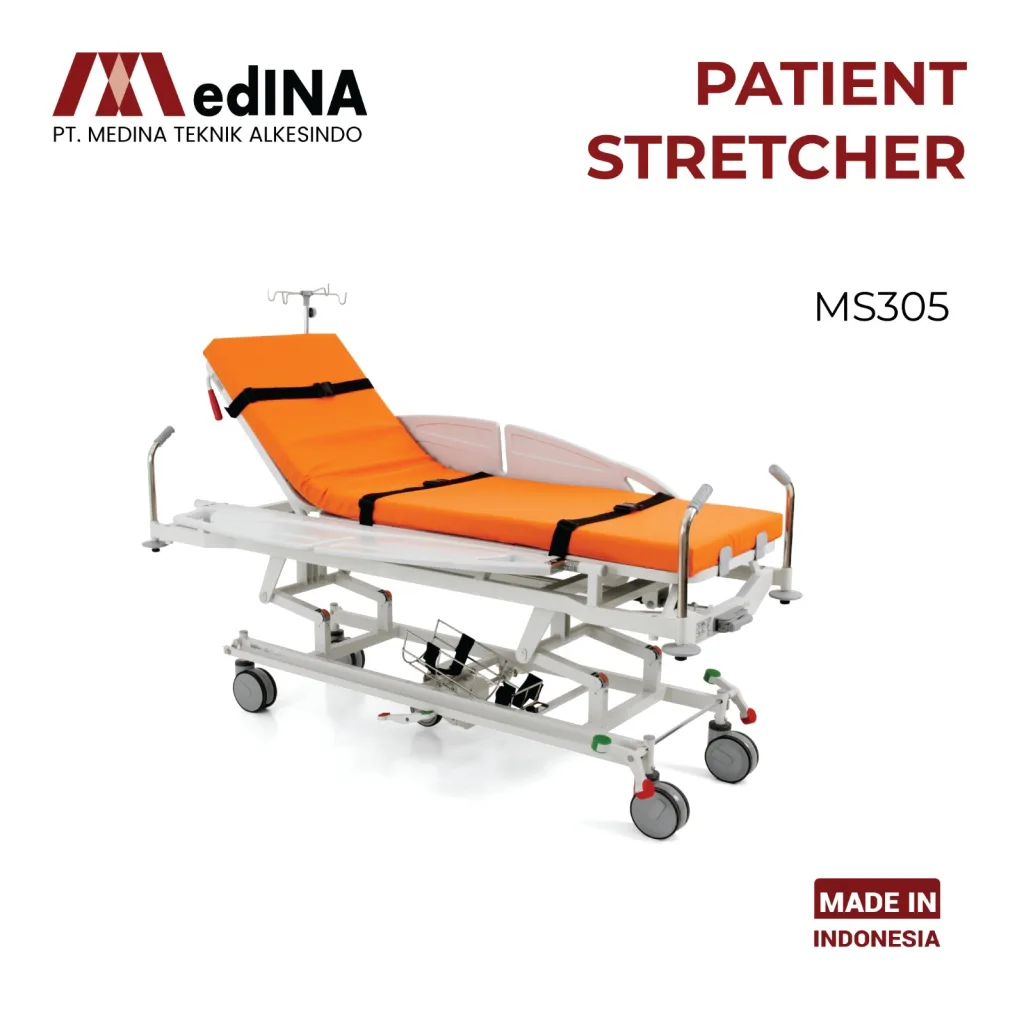
Every piece of equipment in an Ambulance may plays a critical role in saving lives. Among these tools, the Patient stretcher often overlooked serves as the backbone of safe and efficient emergency transport.
More than just a bed on wheels, a well designed stretcher ensures comfort, stability, and rapid mobility for patients in critical situations, such as:
1. Safety During Transport
The primary purpose of a patient stretcher is to secure the patient during transit.
Modern ambulance stretchers come with:
Safety Straps & Side Rails to prevent falls or sudden movement during acceleration or braking
Shock Absorbing Frames to minimize vibration and impact from uneven roads
Locking Mechanisms to keep the stretcher firmly in place inside the ambulance
These features are crucial for preventing secondary injuries while transporting patients.
2. Support for Medical Procedures on the Move
Ambulance stretcher is designed to allow onboard medical care while in transit. Their height and positioning enable paramedics to:
Monitor vital signs using onboard equipment
Administer IV fluids
Perform CPR
This makes the stretcher a mobile treatment platform, not just a means of transport.
3. Speed and Efficiency in Emergencies
In emergency medical services (EMS), every second counts. Stretchers are designed for quick loading and unloading, often with hydraulic or power assisted systems that reduce the strain on paramedics and shorten transfer times. This means patients can be moved from accident scenes to hospital care faster improving survival chances in critical cases.
4. Comfort for Patients in Distress
Transport can be stressful and painful, especially for trauma victims or patients with fractures.
A quality stretcher may offers:
Adjustable backrests for better breathing and comfort
Padded surfaces to reduce pressure sores during long journeys
Smooth gliding wheels to minimize jolts
Even small improvements in comfort can make a big difference in patient morale and stability
5. Versatility Across Patient Needs
From trauma victims to cardiac patients, a stretcher can be adapted for various emergencies. Some models allow for:
Spinal immobilization boards
Oxygen cylinder mounting
Isolation covers for infectious disease control
This versatility ensures that one piece of equipment can handle multiple scenarios in the field
6. Ergonomics for Paramedics
It’s not only patients who benefit paramedics do too. Lifting heavy patients without proper equipment can lead to injuries. Modern stretchers often feature:
Power assisted lifting to reduce strain
Adjustable height for easier patient access
Lightweight but strong frames for easier maneuverability
By protecting EMS workers from back injuries, stretchers help maintain a healthy and effective emergency workforce
In conclusion, a patient stretcher might seem simple however its role is just as vital. By combining safety, comfort, and operational efficiency, it becomes one of the important tool on ambulance transportation, ensuring that patients get to the hospital not just quickly, but securely and in the best condition possible. (IW 1208)